Ellis Long · 6 October 2026
Substrate pH Levels and Their Influence on Fern Species in Indoor Vertical Gardens
Substrate pH in indoor vertical gardens determines nutrient availability for fern species because most ferns absorb minerals most efficiently when the growing medium sits between 5.0 and 6.5; outside that window iron, manganese, and phosphorus become either locked or excessively soluble. Vertical systems rely on lightweight mixes that combine coir, bark, perlite, and sometimes peat, and those components shift pH over time as irrigation water and fertilizers interact with the media. Researchers tracking commercial installations have measured pH drift of 0.5 to 1.0 units within six months when buffering agents are absent, which directly alters root-zone chemistry and frond development.
How pH Controls Nutrient Uptake in Ferns
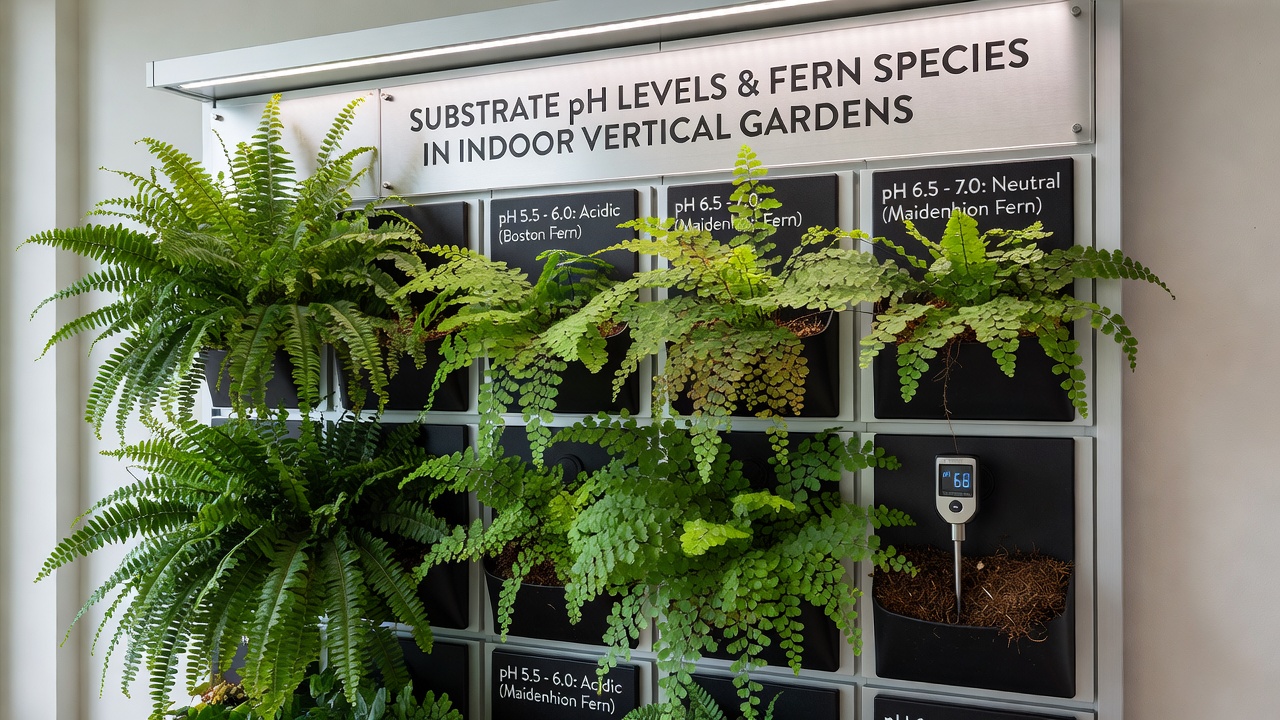
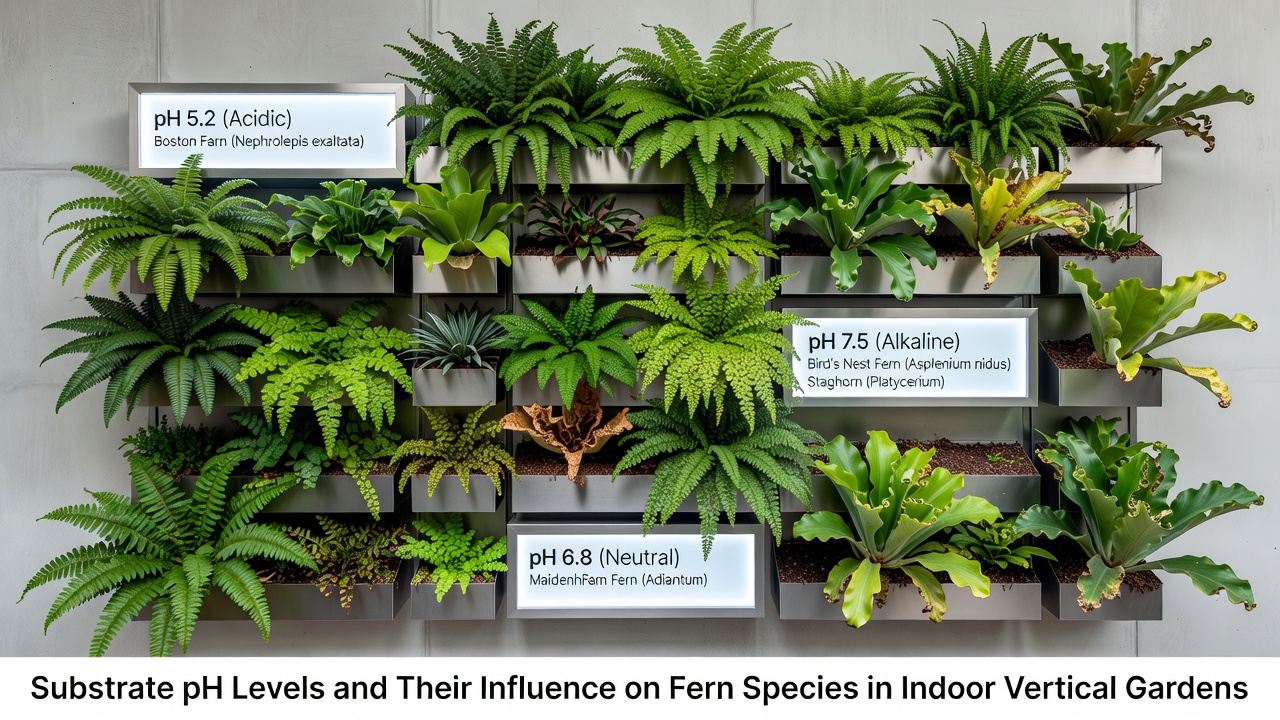
Fern roots release organic acids that locally acidify the rhizosphere, yet the bulk substrate pH still governs whether cations and anions stay in solution; at pH above 7.0 calcium and magnesium dominate while micronutrients precipitate, and below 4.5 aluminum toxicity can appear even in soilless mixes. Data collected from multiple living-wall projects show that Nephrolepis exaltata maintains steady chlorophyll levels when substrate pH stays near 5.8, whereas the same species exhibits interveinal chlorosis once pH climbs past 6.8. Asplenium nidus and Adiantum raddianum display narrower tolerance bands, with growth rates declining sharply outside 5.2–6.0 according to controlled trials run by horticultural departments at several universities.
Monitoring equipment installed in October 2026 across twenty-five North American and European buildings recorded average pH readings of 6.2 in mature installations, prompting technicians to adjust irrigation solutions with dilute phosphoric acid or citric acid blends. Those adjustments restored uptake of iron and manganese within four weeks, visible as darker green new growth on previously pale fronds. Because vertical gardens recirculate nutrient solution, pH sensors placed at both supply and return lines allow operators to correct drift before symptoms appear on the plants.
Substrate Components and Their pH Buffering Capacity
Coir pith tends to stabilize around 5.5–6.0 yet releases potassium that can raise pH over repeated irrigation cycles, while pine bark chunks start more acidic but decompose and gradually lift pH. Perlite remains pH-neutral and provides aeration, so designers combine it with small percentages of dolomite or elemental sulfur when targeting specific fern requirements. One Australian research program documented that adding 5 percent by volume of aged bark reduced pH fluctuation by 40 percent compared with straight coir-perlite blends under identical watering regimes.
Because water quality varies by region, facilities in areas with alkaline municipal supplies routinely incorporate acid injection proportional to bicarbonate concentration. European guidelines published by the International Society for Horticultural Science recommend keeping irrigation pH between 5.5 and 6.2 for fern-dominant walls to prevent calcium carbonate buildup on fronds. In practice, operators test both incoming water and saturated substrate paste weekly during the first three months after installation, then monthly once the system stabilizes.
Species-Specific Responses Observed in Vertical Systems
Pteris cretica tolerates slightly higher pH than most ferns and continues producing new fronds at 6.5–6.8, yet it still shows reduced spore viability above 7.0. In contrast, Polypodium aureum declines once pH exceeds 6.3, with rhizome growth slowing and older fronds browning at the margins. Vertical garden planners therefore group species with similar pH preferences on the same panel or zone, allowing separate irrigation loops when necessary. A Canadian university study tracked five fern cultivars over eighteen months and found that matched pH zones produced 28 percent more biomass than mixed plantings where average pH represented a compromise.
Lighting and airflow also interact with pH effects; higher light intensity increases transpiration and therefore nutrient demand, so the same substrate pH that supports moderate growth under 2000 lux may prove insufficient at 4000 lux. Humidity above 70 percent reduces evaporative demand and can mask early deficiency symptoms, which is why sensor arrays now combine pH probes with leaf-temperature and vapor-pressure-deficit readings.
Maintenance Practices That Stabilize pH
Routine flushing with pH-adjusted water prevents salt accumulation that otherwise drives pH upward. When electrical conductivity exceeds target ranges, technicians drain and refill reservoirs with solution calibrated to 5.8, a step that also removes accumulated organic acids from root exudates. Slow-release sulfur pellets or chelated iron supplements applied to the top layer provide gradual correction without disturbing the dense root mat typical of established vertical gardens. Automated dosing controllers linked to inline pH sensors now maintain setpoints within ±0.2 units in many new installations, reducing manual intervention.
Leaf tissue analysis performed every six months confirms that nutrient concentrations stay within published sufficiency ranges only when substrate pH remains inside the species-specific window. Facilities that skip tissue testing often discover imbalances only after visible symptoms appear, at which point recovery requires both pH correction and supplemental foliar feeds.
Conclusion
Substrate pH directly governs mineral availability and therefore the long-term health of fern species grown in indoor vertical gardens. Consistent measurement, species-matched planting zones, and responsive irrigation management keep pH within the narrow bands required by most ferns. As more buildings incorporate living walls, standardized monitoring protocols and buffered substrate recipes continue to improve outcomes across different climates and water sources.