Cameron Krause · 20 October 2026
Seasonal Shifts in Microbial Activity Within Soil Layers of Multi-Level Office Plant Enclosures
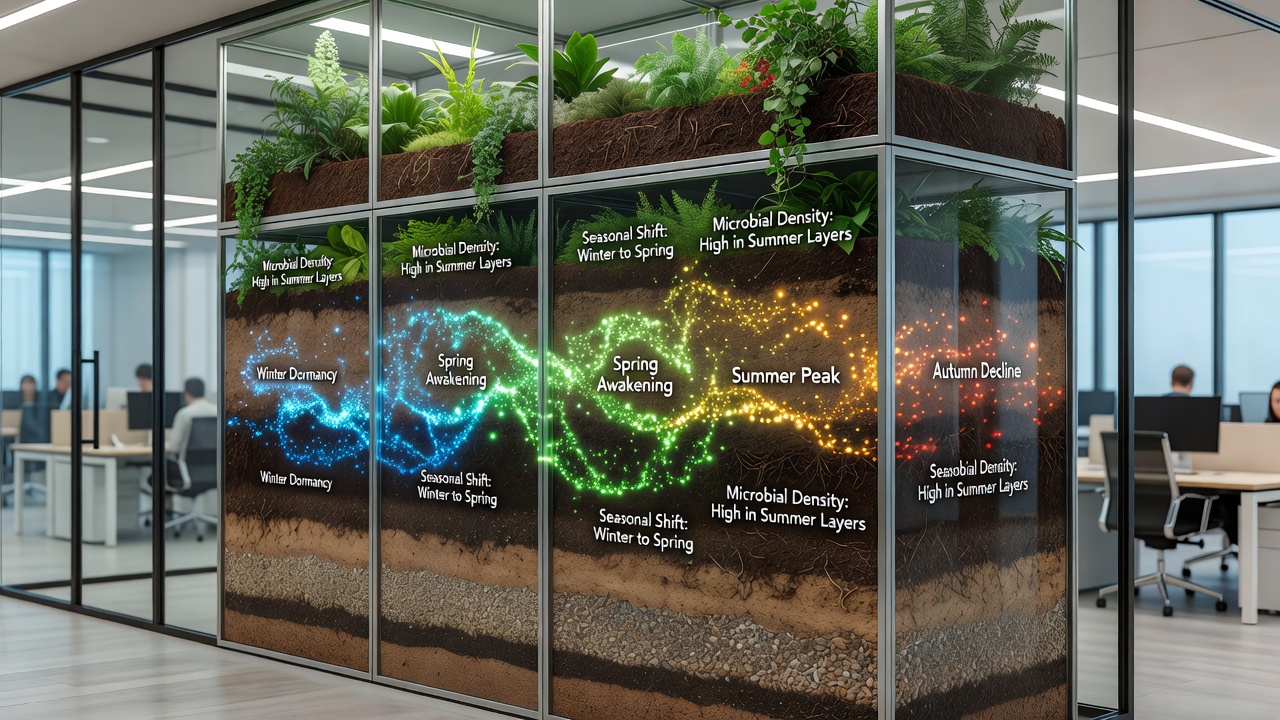
Office plant enclosures in multi-story buildings create layered soil environments where microbial communities respond to annual cycles even under controlled conditions, and observers note distinct patterns emerge across depths from surface substrates down through root zones to drainage layers.
Soil Structure in Enclosed Office Systems
Multi-level plant installations typically feature engineered substrates with varying organic content, mineral particles, and drainage components that support vertical gardens or atrium installations, while these setups maintain consistent temperatures through HVAC integration yet still experience fluctuations tied to external seasonal changes via air exchange and lighting schedules.
Researchers track bacterial and fungal populations at different horizons because surface layers often host more aerobic species that thrive during periods of higher humidity, whereas deeper strata support anaerobic processes influenced by moisture retention from irrigation cycles.
Temperature and Moisture Influences Across Seasons
Data from monitoring programs show that winter months bring reduced microbial respiration rates in upper soil layers due to cooler ambient conditions and lower plant transpiration, and this slowdown extends into spring when warming trends gradually increase enzymatic activity throughout the profile.
Summer conditions accelerate decomposition in organic-rich top layers as elevated temperatures and consistent lighting promote bacterial growth, but fall transitions introduce variability when external air brings drier conditions that affect water availability in mid-level strata.
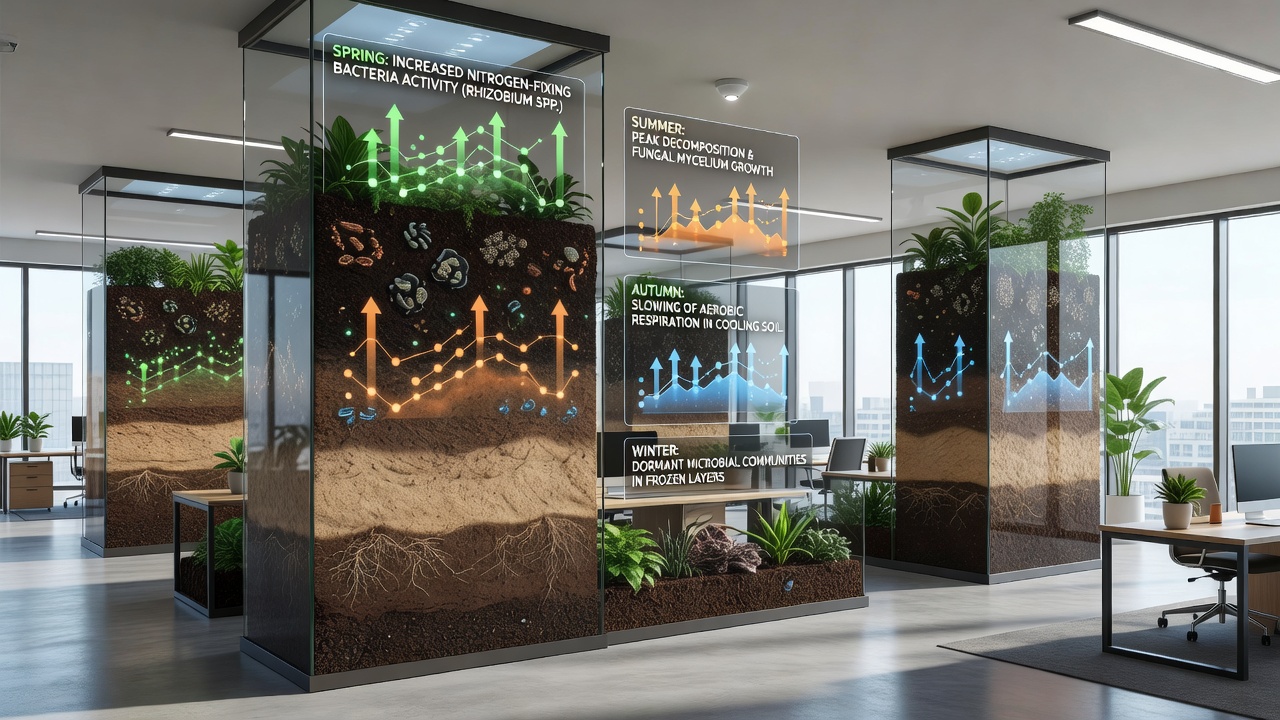
In October 2026, longitudinal studies across commercial buildings in temperate zones recorded measurable increases in fungal hyphal networks in intermediate soil layers coinciding with reduced daylight hours and adjusted irrigation protocols.
Microbial Community Dynamics
Analyses of soil samples reveal that actinomycetes populations expand in autumn within lower drainage zones where organic matter accumulates, and these shifts correlate with changes in plant root exudates that vary by species and growth phase.
Evidence indicates nitrogen-fixing bacteria maintain steadier activity year-round in enclosed systems compared to outdoor soils because of buffered temperatures, yet phosphorus-solubilizing microbes demonstrate clearer seasonal peaks tied to moisture gradients established during summer irrigation.
Studies conducted by teams at Wageningen University have documented how ventilation patterns in multi-story structures introduce subtle humidity variations that influence microbial enzyme production across all soil horizons.
Interactions With Plant Enclosure Infrastructure
HVAC systems and artificial lighting schedules interact with seasonal outdoor conditions to create microclimates within soil profiles, and observers find that these factors drive migration of certain microbial groups between layers as water movement and gas exchange change throughout the year.
Longer daylight in spring and summer supports higher photosynthetic rates in canopy plants which in turn supplies more labile carbon to surface microbes, whereas reduced light in winter months leads to slower carbon turnover that affects community composition deeper in the profile.
Measurement Approaches and Findings
Techniques such as phospholipid fatty acid analysis and metagenomic sequencing allow precise tracking of microbial biomass and diversity shifts, with results showing that total microbial abundance often peaks in mid-soil layers during transitional seasons like spring and fall.
According to reports from the USDA Agricultural Research Service, controlled environment studies confirm that substrate composition plays a larger role than external weather in determining baseline activity levels, although seasonal overlays remain detectable in all tested configurations.
Conclusion
Seasonal patterns in microbial activity persist within the structured soil environments of multi-level office plant enclosures despite heavy environmental controls, and ongoing research continues to map these responses through integrated monitoring of temperature, moisture, and community composition across vertical profiles.