Yara Peters · 8 September 2026
Biophilic Installations and HVAC Efficiency: Analyzing Living Wall Performance in Multi-Story Commercial Structures
Biophilic installations such as living walls have gained traction in multi-story commercial structures because they combine vegetation with building systems in ways that can influence indoor environmental controls, and researchers have tracked these effects through controlled monitoring programs across various climates and building types.
Core Components of Living Wall Systems
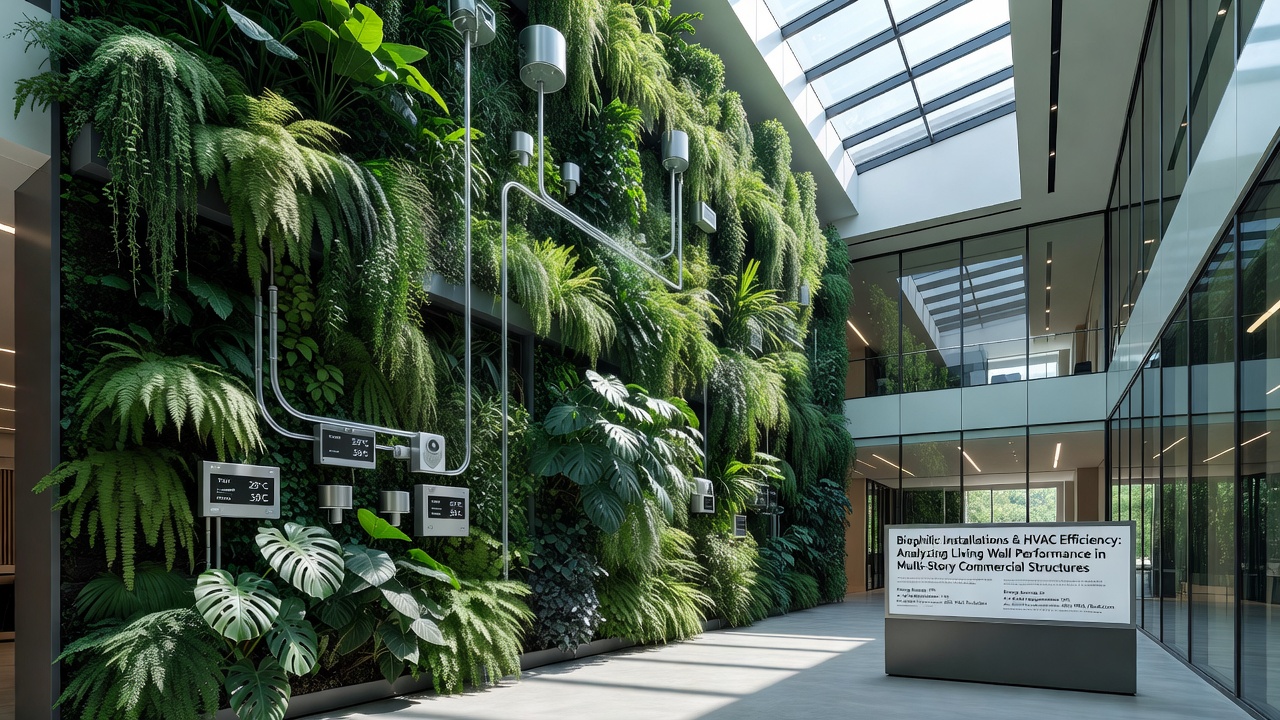
Living walls consist of modular panels or vertical frameworks that support soil or hydroponic media along with selected plant species, while irrigation lines and drainage components integrate into the overall assembly, and these setups often connect to sensors that measure moisture levels and air exchange rates. Observers note that the choice of plants matters because species with dense foliage and high transpiration rates tend to interact more directly with surrounding air streams, whereas structural engineers must account for added weight loads and root expansion patterns when retrofitting existing facades on buildings that rise above ten stories.
Interactions Between Vegetation Layers and Mechanical Ventilation
HVAC systems in commercial towers typically cycle conditioned air through ducts that run vertically and horizontally, yet living walls positioned near intake zones or exterior cladding can alter local temperature gradients and humidity profiles, which in turn affects the load calculations that building management teams use to schedule chiller and fan operations. Data collected from instrumented sites shows that evapotranspiration from the plant surfaces releases moisture into the air stream during warmer months, which can reduce the demand for separate humidification equipment, while the same surfaces provide a degree of thermal mass that absorbs heat during peak solar exposure periods and releases it more gradually after sunset.
Performance Data from Monitored Commercial Towers
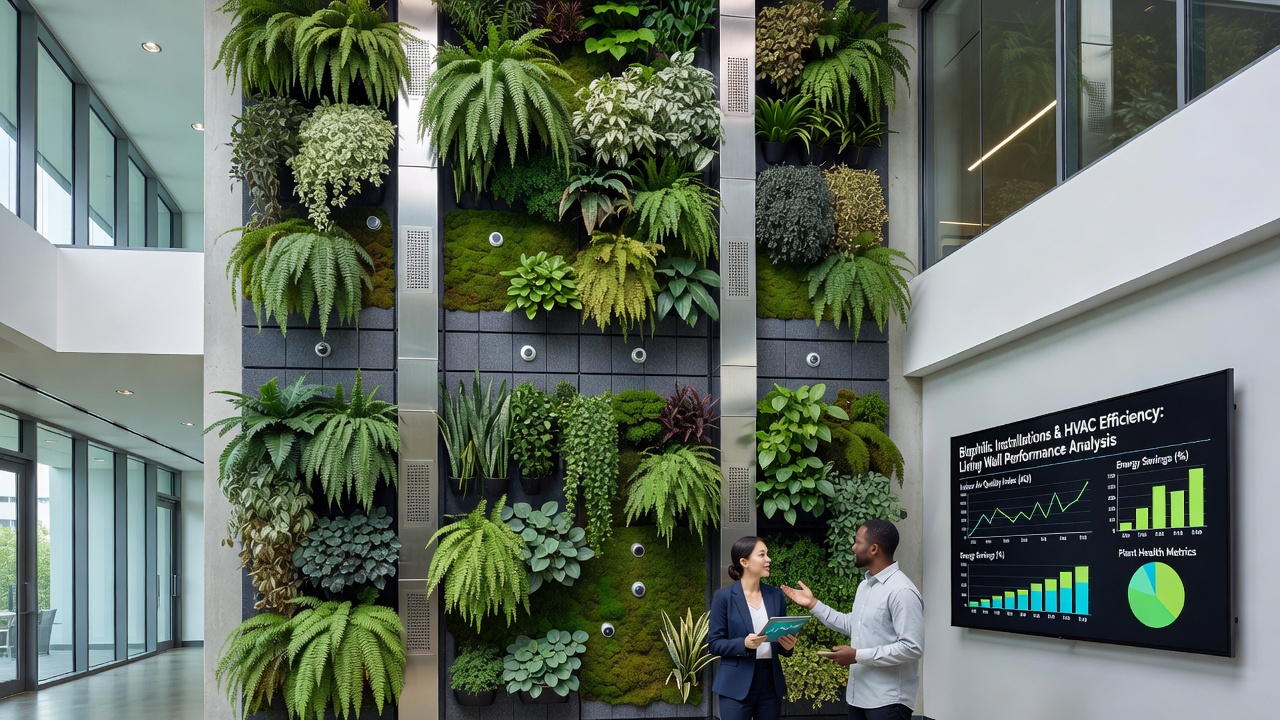
One multi-story office complex in Chicago incorporated living walls across three elevations and recorded HVAC energy consumption patterns for eighteen months before and after installation, revealing that peak cooling loads decreased by measurable margins during summer afternoons when the vegetation layer shaded the outer wall surface and moderated surface temperatures. In another case, a Singapore high-rise equipped with interior living walls along atrium corridors demonstrated stabilized relative humidity readings across multiple floors, which allowed operators to adjust variable air volume boxes and lower overall fan speeds without compromising occupant comfort metrics tracked by the building automation platform.
Researchers have compiled datasets from European commercial buildings as well, where living wall retrofits occurred alongside upgrades to air handling units, and the combined interventions produced documented shifts in annual energy use intensity figures that building operators attributed to both reduced infiltration losses and improved air filtration through the planted media. Figures reveal that maintenance intervals for filters extended in several instances because particulate capture at the wall surfaces reduced the burden on mechanical filtration stages downstream.
September 2026 Monitoring Updates
In September 2026, updated sensor logs from several North American and Australian commercial properties indicated continued performance consistency in living wall systems that had reached three to five years of age, with HVAC runtime logs showing sustained reductions in compressor cycling compared with baseline periods before the installations. These reports also highlighted that irrigation scheduling algorithms had been refined to align with seasonal evapotranspiration rates, which prevented excess moisture from entering return air paths and thereby avoided additional dehumidification cycles that would otherwise increase electrical demand.
Key Variables Affecting Outcomes
Building orientation, local climate zone, plant species selection, and the proximity of living walls to air intake or exhaust points all emerge as variables that influence measured results, according to aggregated findings from multiple research teams. Tall structures experience greater wind exposure at upper levels, which can accelerate drying of the growing medium and require more frequent irrigation cycles that in turn affect pump energy consumption within the biophilic system itself. Observers have also recorded that interior living walls tend to produce more immediate effects on localized air quality readings than exterior installations, because the air volume in contact with the vegetation remains more contained within the conditioned envelope.
Conclusion
Analysis of living wall performance in multi-story commercial structures continues to draw from expanding datasets that connect vegetation layers directly to HVAC operational metrics, and ongoing monitoring programs provide the quantitative basis for evaluating long-term energy interactions across diverse building typologies and geographic regions.